
We live in an era where death executions are through hanging, lethal injections etc and create a huge outrage if the executed person suffers for a few minutes during the execution. Crucifixion was a sharp contrast to the executions that we have now and was a common practice in the 1st century when the gospels were written. Since we have forgotten how cruel it was, let’s take a deeper look at Scourging and Crucifixion to understand the magnitude of Jesus’ sacrifice on the cross.
Scourging:
Scourging was absolutely a horrible punishment. Not everyone who were crucified was subject to scourging but Pontius Pilate had Jesus scourged (Matthew. 27:26; Mark. 15:15).
- The floggings lasted at least 39 lashes or more by soldiers who used a scourging whip (flagrum) that had iron balls or even small sheep bones tied at the end of each leather bands.
- The metal weights served to cause serious bruising, or contusions, and the leather of the thongs cut into the skin.
- The flogged person was stripped of his clothing and bound to a post. The beatings went from the shoulders to the back to the buttocks to the back of the legs.
- After only a few lashes, the depths of the cuts reached into muscle tissue and left the victim with ghastly wounds with muscle and bone exposed.
- With His flesh torn on either side and open wounds after the scourging, Jesus would have lost a lot of blood even before he was crucified and when He carried the cross to Golgotha, every step would have been extremely painful (That would explain why the soldiers asked Simon of Cyrene to carry the cross – Luke 23:26)

Crucifixion:
Crucifixion as a means of torture and execution started in 6th century B.C. and remained popular for over 1000 years.
- Crucifixion was practiced in many cultures before it was outlawed in the Roman Empire by Constantine in 341 AD.
- Cicero, a Roman Statesman in 1st century BC states that “Of all punishments, it is the most cruel and most terrifying.” and that’s the reason it wasn’t allowed for Roman citizens (except those who left the army) and women.
- Cross: The crucified person was asked to carry the crossbar which weighed around 100 lbs and the vertical bar (weighed around 300 lbs) was placed in the execution site. Different types of crosses like the alphabets X, T (upright or sideways) were used.
- Stripped: Jesus crucifixion paintings always show Jesus with a loin cloth, but in reality, Roman crucifixion was designed to be as gruesome, humiliating a death as possible. The condemned were stripped naked in order to die with as little dignity as possible.
- Nails: The hands were nailed on the crossbar and the feet on the vertical bar. The feet were joined almost parallel, both transfixed by the same nail at the heels, with the legs adjacent; the knees were doubled, the right one overlapping the left; the trunk was twisted; the upper limbs were stretched out, each stabbed by a nail in the forearm. The nail on the wrists meant that the entire body didn’t have enough support and the person found it very difficult to exhale.
- Cause of death: Various factors, including the severity of flogging wounds, dehydration, asphyxiation, weather conditions, type of cross used, and the condemned man’s age, determined the length of time victims typically survived 24 to 36 hours on the cross (but Jesus died within 6 hours as He gave up His spirit on His own – Matt 27:50 ).
- The victim would only be able to take shallow breaths, until his arms weakened. At that point, he would have to push his body up with his feet to breathe. This would be terribly painful on multiple levels: putting pressure on the nail wounds in the feet and the hands, and rubbing the open wounds on his back up against a large beam of wood.
- Often, the legs were broken or the chest was pierced with a spear to expedite the death. Jesus’ legs were not broken and he was already dead when the soldier pierced Him with a spear John 19:33-34
- Dead bodies: The dead bodies were left to be eaten by stray dogs and hyenas (usually, the victim’s feet would be no more than one or two feet from the ground) and very rarely relatives requested for the body to be buried (just like Joseph of Arimathea did for Jesus – John 19:38).
- Criminals: The crucified persons were usually those who revolted against the empire or committed deadly crimes but Pilate himself declared the he couldn’t find any wrong in Jesus (Luke 23:4)
Jesus’ agony: Jesus would have suffered even more as blood would have drenched His torso, pouring from His head and brow, running like rivers from the deeply torn flesh in His hands and feet. The effect of the scourging would have caused His body to swell up and become horribly discolored. His eyes would have matted with the blood that poured from the wounds in His brow – wounds caused by the crown of thorns that bore down into His skull as the soldiers pushed it hard upon His head. The whole scene would have been ugly, unsightly, repulsive, sickening, vile, foul, and revolting.
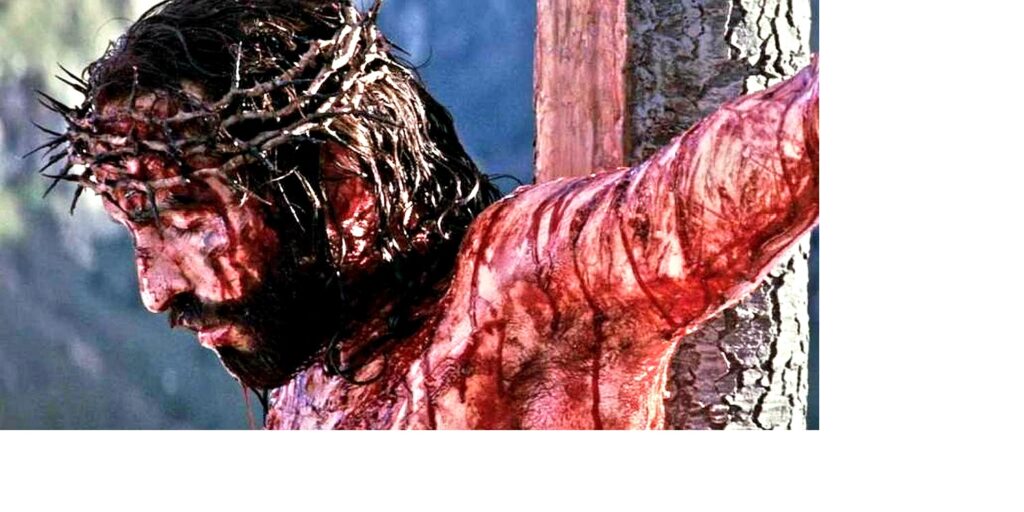
Prophesies fulfilled: Prophet Isaiah correctly prophesied Jesus’ appearance on the Cross (Approximately 700 years earlier). In Isaiah 52:14, the prophet wrote with a sense of horror, “As many were astonished at thee; his visage was so marred more than any man, and his form more than the sons of men.” In Isaiah 53:2, Isaiah continued, “He hath no form nor comeliness; and when we shall see him, there is no beauty that we should desire him”. In fact, the entire chapter of Isaiah 53 has many prophecies about Jesus that were fulfilled on the cross.
References:
https://www.coraevans.com/blog/article/the-most-gruesome-details-of-the-crucifixion-of-jesus
https://www.britannica.com/topic/crucifixion-capital-punishment
Leave a Reply